Working Group "Atmospheric Risks"
Meteorological extreme events, such as winter storms, heavy precipitation, hail, or convective wind gusts are often associated with serious consequences for the society and their assets. However, these events occur not everywhere with the same intensity, but exhibit a high spatial and temporal variability. Within this context, various research projects are carried out in the working group "Atmospheric Risks". In the course of the relevant weather systems, a special focus is on severe convective storms, hailstorms and heavy rainfall events.
News

The current issue of DKKV Magazine focuses on the extreme weather event “hail,” which is therefore related to our research activities.
more...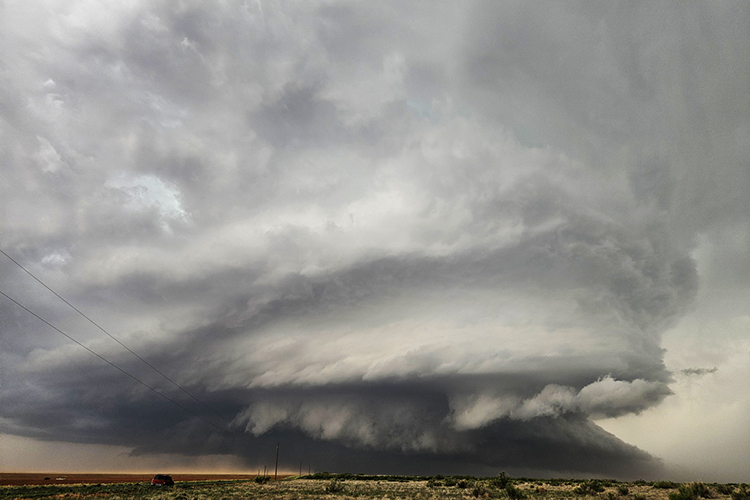
Insights into an extraordinary measurement campaign on hail formation: storm chasing, supercells and spectacular updraft measurements
more...
The Quarks team visited us to learn more from Markus Augenstein and Michael Kunz.
more...