
Strengthening heat action planning for small municipalities
Climate change poses growing challenges for local authorities: more frequent and intense heat events endanger public health and require proactive measures. Smaller local authorities are particularly affected, but often have limited human and financial resources. This is where the ‘PROLOK – Process scheme for local heat adaptation in small municipalities’ project comes in.
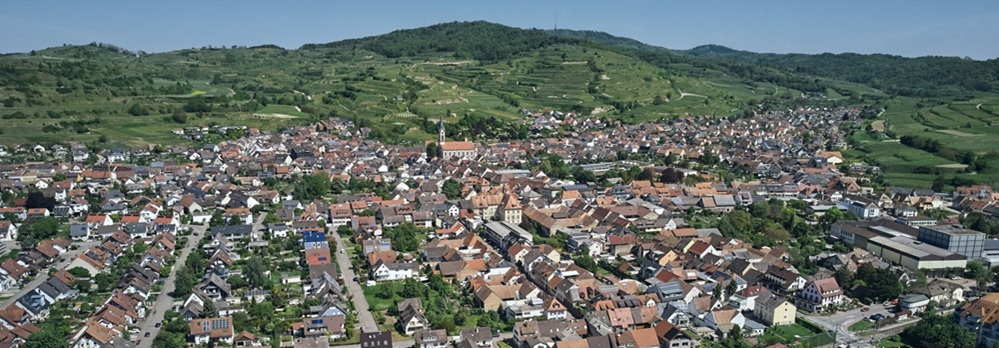
Following a successful first phase lasting until summer 2025, in which an initial version of a process scheme for heat action planning was developed and tested in the municipality of Ihringen, the current phase aims to make this approach available for widespread use in Baden-Württemberg. The core idea is to enable local authorities to draw up effective heat action plans independently and without external process control.
The project has several key areas of focus: The process scheme will be revised based on the experiences gained during the pilot phase and adapted to the actual capacities of small municipalities. Its practical suitability will be tested in three other municipalities across Baden-Württemberg to ensure scalability. In addition, bioclimatic indices such as the Universal Thermal Climate Index (UTCI) will be integrated, which takes into account not only temperature but also humidity, wind and radiation. These indices help to assess heat stress not only in terms of temperature but also in terms of actual thermal sensation.
Another key component is the development of an online platform that brings together all project results, guidelines and practical aids. In future, local stakeholders will find interactive tools, sample plans and checklists for heat action planning there. In addition, a practical guide and a short dossier for political decision-makers are being produced. This will ensure that both administrators and politicians receive concrete guidance for action.
The project is supported by the University of Freiburg, the Karlsruhe Institute of Technology (KIT), Klima Plus and the Regional Association of Southern Upper Rhine and is funded by the Innovation Campus Sustainability (ICN). It combines scientific expertise with practical implementation and close cooperation with local authorities. The result is an approach that is not only theoretically sound, but also tested under real conditions.
With PROLOK, the project is making an important contribution to climate adaptation in rural areas. The results are intended not only to reduce heat stress, but also to increase resilience to the effects of climate change and strengthen the capacity of small municipalities to take action.